Expert software engineer in Nepal (full-time, remote)
I build the product.
You drive the vision.
I engineer bespoke digital products from the ground up. Operating as a one of the best software engineer in Nepal, I build lightning-fast web applications and backend architectures that scale seamlessly

Kathmandu, UTC+5:45 — my afternoon is a full European working day.
Building success together.
TEAMS I’VE COLLABORATED WITH









- of shipping production code
- 4+ yrs
- products delivered for clients
- 12+
- companies, plus freelance clients
- 5
- working hours covered daily
- EU + US
what I do
Three layers, one person.
Most of what I have shipped, I have shipped alone or in a team small enough that owning a feature meant owning it from schema to deploy. You do not need to work out which layer your problem sits in. Most projects need parts of all three, and each layer has its own page.
- 01 / interface
Product interfaces
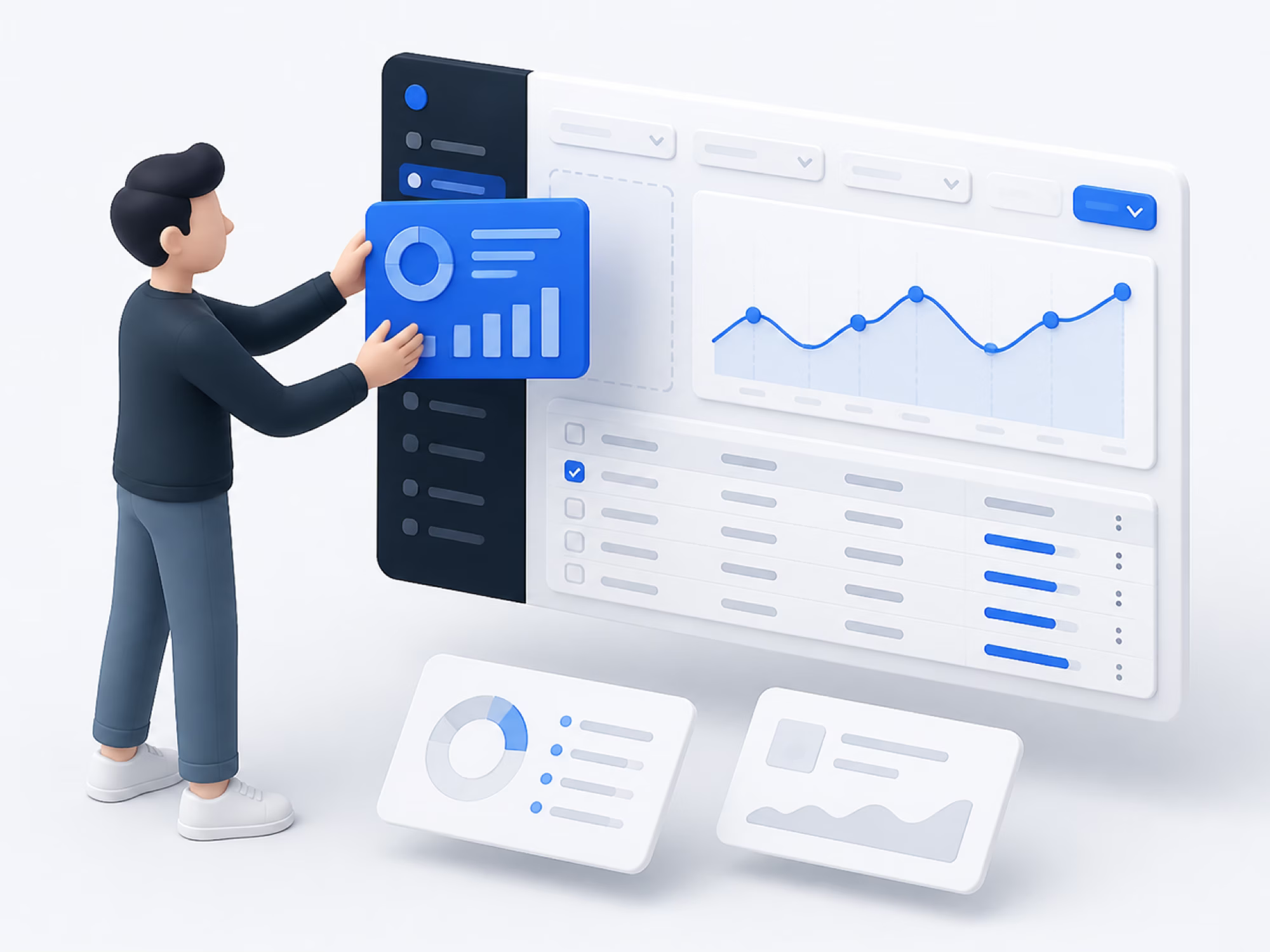
The part your customers touch. React, Next.js and TypeScript, strict — component libraries and design-system primitives the rest of the frontend builds on, with bundle size and data fetching treated as features rather than cleanup.
- dashboards
- admin panels
- customer portals
- data-heavy tables
- AI product interfaces
- onboarding flows
- design systems
- marketing sites
- Next.js
- React
- TypeScript
- Tailwind CSS
- React Query
- Node.js
- Core Web Vitals
- 02 / system
The system under it
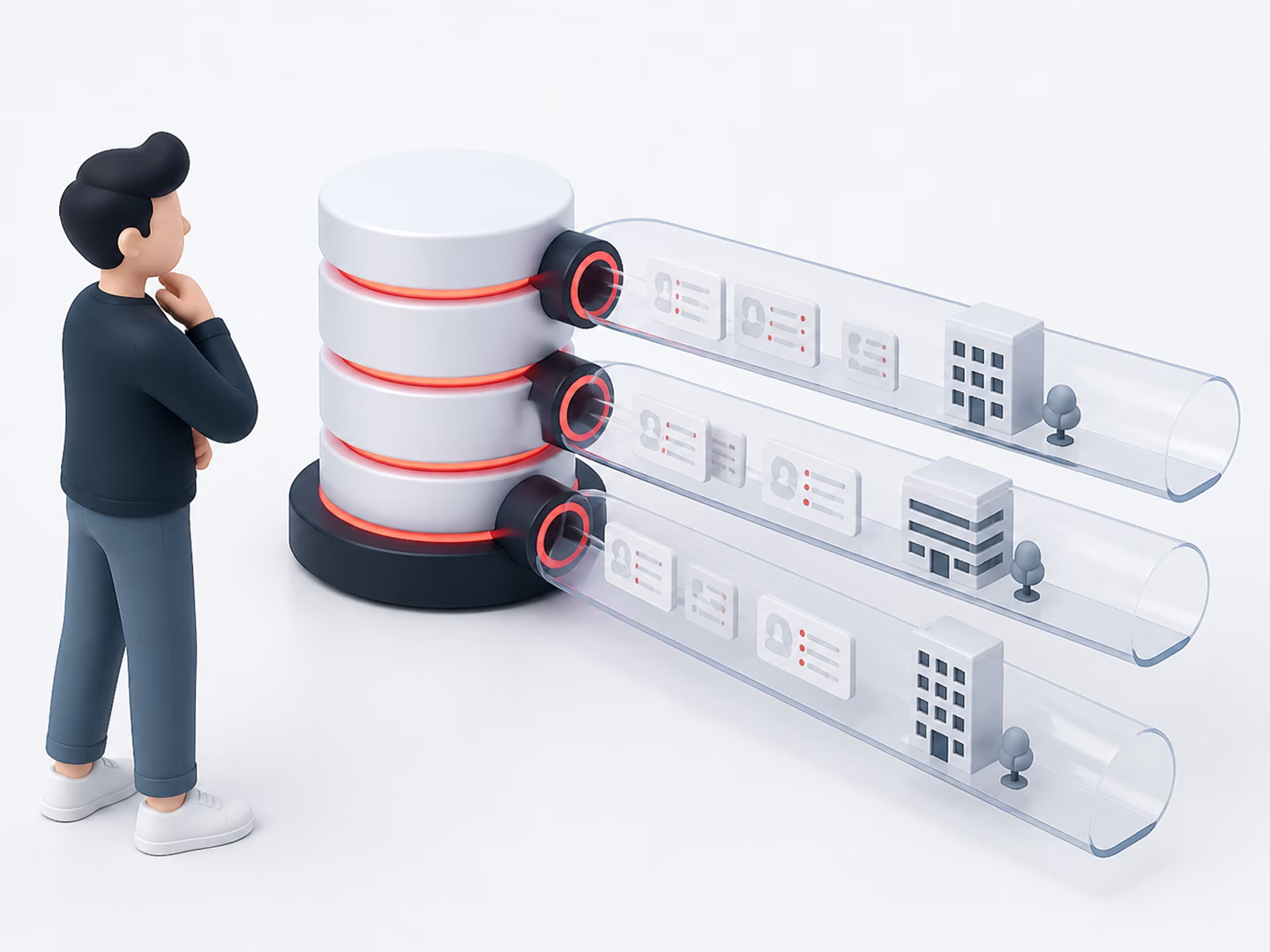
The part nobody sees until it breaks. NestJS and Node APIs on PostgreSQL schemas designed for the failure case first — multi-tenant isolation, role-based access, queues and background jobs that can run twice without doing damage.
- SaaS platforms
- multi-tenant apps
- booking systems
- APIs
- auth and roles
- payments and billing
- background jobs
- third-party integrations
- NestJS
- Node.js
- PostgreSQL
- Prisma
- Redis + BullMQ
- AWS
- 03 / retrieval
AI that cites its sources
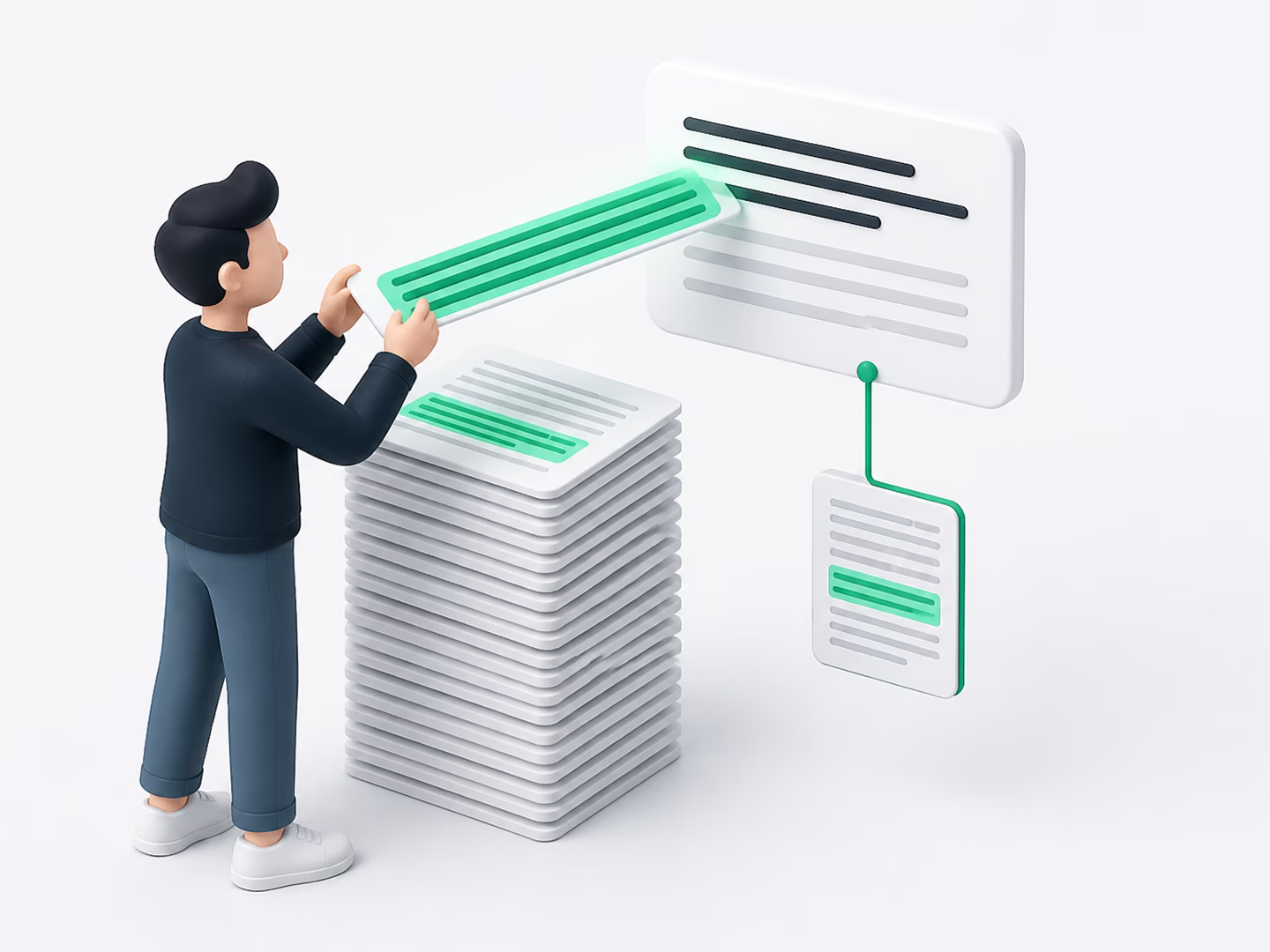
AI answering from your documents rather than from a general model's guess. Ingestion, chunking, embeddings and vector search sitting next to the relational data — answers trace back to the document they came from, and "not sure" is a handled outcome.
- RAG search
- document extraction
- question answering
- hybrid search
- ingestion pipelines
- AI workflows
- evaluation sets
- AI in an existing product
- PostgreSQL
- pgvector
- Embeddings
- Vector search
- Document extraction
- evals
selected work
Three systems, and what was actually hard in each.

Noveon
2026A website for a Hong Kong investment firm, built so people who are not developers can run it. Next.js on the front, Strapi on the firm's own server behind it.
- Next.js
- React
- TypeScript
- Tailwind CSS
- Strapi
Marti China
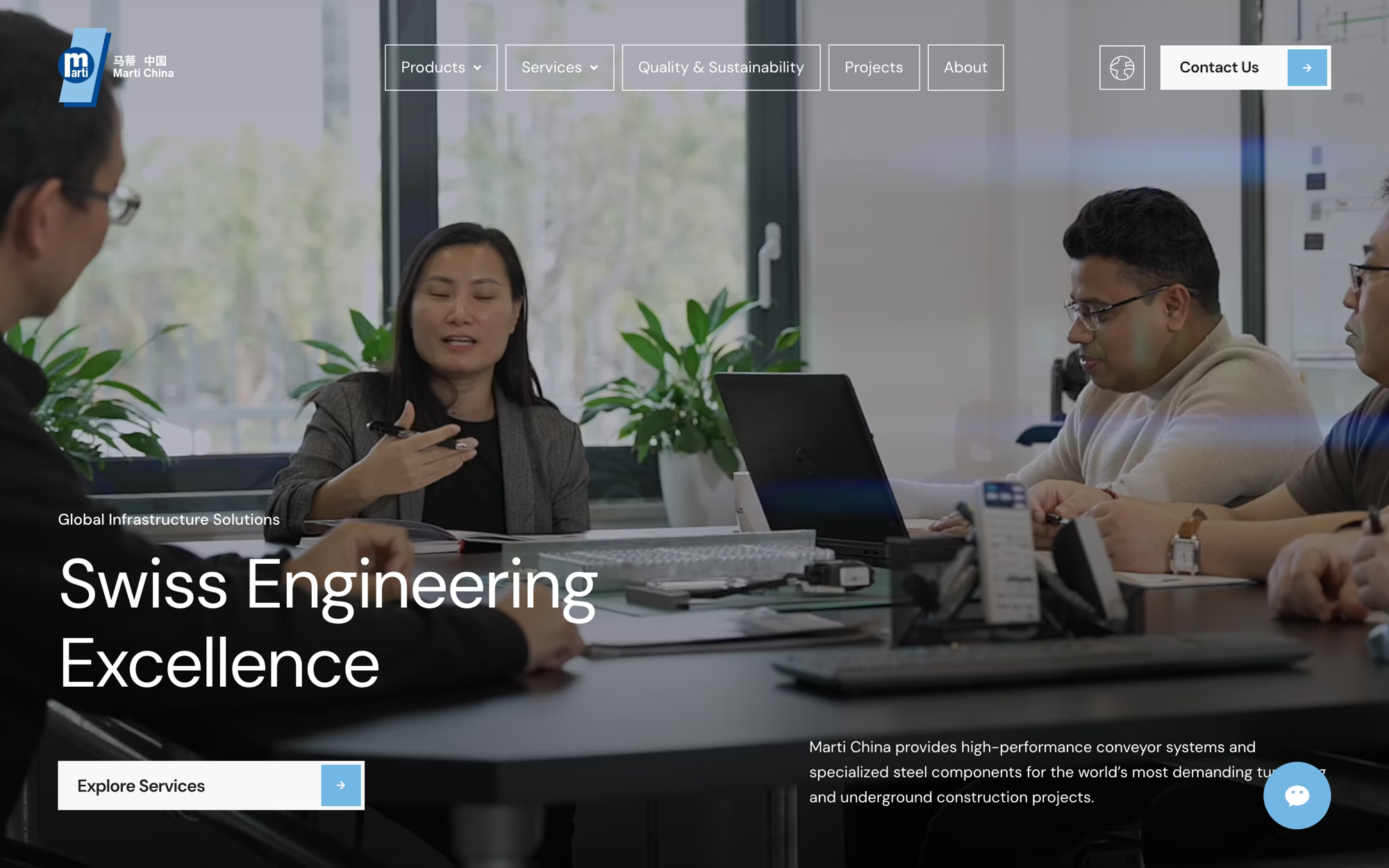
2026A corporate site for the China arm of a Swiss tunnelling supplier. Next.js on the front, self-hosted Strapi behind it: 49 product pages, 17 project references, two languages.
- Next.js
- React
- TypeScript
- Tailwind CSS
- Strapi
- Baidu Maps

Gradsy
2026A centralized platform for students, counselors, and admins with role-based access - built with Next.js and NestJS, and deployed on AWS using S3, SES, and Lightsail.
- Next.js
- NestJS
- TypeScript
- Prisma
- PostgreSQL
- Redis
- BullMQ
- AWS
- AWS Simple Email Service
- S3
- Lightsail

Yacht Cloud
2024Engineered a multitenant frontend and RAG AI planner that powers YachtCloud and multiple white-labeled broker platforms by instantly filtering massive luxury yacht inventories.
- Next.js
- React
- TypeScript
- Tailwind CSS
- Elasticsearch
- RAG
- LangChain
what happens after you hire me
One of the most reliable engineers I’ve worked with.
Ritesh is the kind of engineer you want on your toughest problems. He brings strong technical depth, takes full ownership, and consistently turns complexity into solutions that work. Sharp, dependable, and always focused on getting the job done right.
Sushant Raj DangalCEO, Ancoda Labs (opens in a new tab) Delivered on time, every time
He took ownership of what he was given and often went past what was asked. Solid engineer, easy to work with. Ritesh was a full-stack developer on our team and consistently delivered on time.
Shashank AdhikariCEO, Milo Logic (opens in a new tab) A true problem solver
Alexa Lifesciences required internal tooling to handle customer inquiries, inventory management, and other operational workflows. Ritesh brought strong technical insight to the project and was a reliable, thoughtful partner throughout the process.
Dinesh ThakurManaging Director, Alexa Life Sciences (opens in a new tab)



My go-to for anything technical
Ritesh built my personal portfolio site and has been my go-to for anything technical since. He explains things clearly and actually follows through, which is rarer than it should be.
Prajesh SagarSenior Analyst, Salt Trading Corporation Limited (opens in a new tab) Sensible decisions, clean implementation
He took full ownership of our frontend work. Clean implementation, sensible decisions, and he pushed back when something didn't make sense rather than just building what he was told.
Abhinav RegmiCEO, Azminds Services Pvt. Ltd. (opens in a new tab) Zero Compromise
Ritesh's work ethic is unbelievable. He helped built a bulletproof backend and a perfectly sharp frontend. An absolute joy.
Courtney RayappuAccount Executive, Momentum



how I work
Same three moves, every project.
- 01
Start at the constraint
Before any code, I map the domain and the failure modes. What breaks under concurrency, what has to stay correct when a job retries, what the deadline actually protects. The constraint decides the design; the feature list does not.
- 02
Ship the thin slice
The smallest version that runs end to end, deployed, with the boring parts boring: typed, migrated, observable. No abstraction until the second time I need it. You see something working early enough to change your mind cheaply.
- 03
Own it in production
Deployment, the bugs after it, and the documentation written while I build rather than promised for later. If an estimate is going to slip, you hear it the day I know instead of the week it lands.
toolkit
The tools I actually ship with.
- languages
- frontend
- backend & data
- ai & llm
- cloud & infra
faq
Questions I get asked on the first call.
Are you senior enough to own a product on your own?
I was the only engineer on Gradsy. Two repositories, three dashboards for students, counselors and admins, one API behind them that denies every request until a role allows it. Two counselors clicking the same appointment slot cannot both get it, because that rule lives in a database constraint rather than in application code. Background jobs can run twice without doing damage. Architecture, schema and deployment were mine, and so were the bugs.
You're in Kathmandu. How does that work for a team in Europe/US?
I am based in Nepal (UTC+5:45). My afternoon and evening naturally cover a full European workday, making live standups and pair programming seamless. For US teams, my evening perfectly aligns with East Coast mornings, and I am fully flexible to adjust my schedule to ensure we have all the overlapping hours you need.
How does a company in Europe/US hire someone based in Nepal full time?
The same way you hire anyone remote, plus one step: use a cross-border management platform like Niural or Deel. For a flat monthly fee, the platform handles all the legal compliance and tax forms, letting you generate a contract in minutes and pay me by approving a single monthly invoice. If your company prefers to officially hire me as a full-time employee rather than an independent contractor, that is completely possible too; these same platforms can act as an Employer of Record (EOR) to employ me locally on your behalf without you having to open a subsidiary here.
What does full stack mean in your case?
Frontend-heavy. React, Next.js and TypeScript are the strongest part: component libraries, design-system primitives, bundle size, data fetching. Behind that I write Node and NestJS APIs, design the PostgreSQL schema they sit on, and deploy to AWS, Cloudflare or Azure. Infrastructure is the thinnest of the three. I have not run Kubernetes in production. If a role needs it I will learn the cluster, but the platform is not what you would be hiring me for.
You build with AI. Who is responsible for the code?
Me. Agents write the first pass on a lot of what I ship. I read every line before it merges, and the parts that decide money, permissions or data shape I usually write myself. The review is most of the work and I schedule time for it.
What are you like to work with?
I ask what the constraint is before I ask what to build. If an estimate is going to slip, you hear it the day I know. I write documentation while I build, because I have been the only person who could read a system, and that is a bad place to put a team.
Tell me the constraint and the deadline.
Thirty minutes on what you're building, what's in the way, and whether I'm the right person for it. If I'm not, I'll say so on the call.